How to Choose a Lift Chair That Fits the Person, the Room, and the Routine
How to Choose a Lift Chair That Fits the Person, the Room, and the Routine
Choose a lift chair by working through three layers in order. First, match the chair to the person: body dimensions, transfer ability, control reach, positioning needs, and weight capacity for the exact model. Second, match it to the room: delivery path, full-recline clearance, outlet placement, cord routing, and caregiver access. Third, match it to the daily routine: how many times the person sits and stands, what activities happen in the chair, who helps, and what the backup plan is if power goes out. Only after those three layers are settled should you address coverage and payment.
If you are helping a parent or spouse find a lift chair for the first time, the number of options can feel overwhelming. Every manufacturer describes their product as comfortable and easy to use. But a lift chair that works beautifully for one person can be a poor fit, or even a safety risk, for the next. Everybody's different. Everybody's individual. The chair has to match the person who will actually sit in it, the room where it will actually live, and the daily routine it will actually support.
Here is what you need to know to get this right.
Why the Person Comes Before the Product
Before you look at fabrics, colors, or brand names, start with the transfer. What happens right now when the person sits down and stands up? That is the question that determines almost everything else about your lift chair selection.
A lift chair is a medical device designed to help a person rise from a seated position and return to sitting. An FDA 510(k) clearance record for one electric positioning chair describes exactly this intended use. But comfort, control, stability, room fit, and daily use determine whether a particular model makes sense for your family member.
Body Dimensions and Seat Fit
Seat height, seat depth, and seat width work together. If any one of these is wrong, the chair will not support the person properly. Too much seat depth prevents the person's back from resting against the backrest and forces the feet off the floor. Too little depth does not support enough of the thighs. Seat height affects the standing motion directly; if the seat is too high or too low, the person may need to lunge, twist, or reach awkwardly for a walker.
The right approach is to use the manufacturer's fit method for the exact model you are considering and compare those measurements with the person's body. A general size label such as "medium" or "large" is not enough. Two chairs labeled the same size from two different manufacturers may have meaningfully different seat dimensions.
Weight Capacity Is Model-Specific
Weight capacity is a safety limit, not a marketing category. The FDA clearance example referenced above describes two models with different sizes and different capacities. You cannot transfer one model's numbers to another. Before anyone sits in a lift chair, verify the current label and manual for that exact model. This is not a place to guess or round down.
Controls and Cognitive Fit
The person using the chair needs to be able to understand, grip, and operate the hand control independently, or the caregiver plan needs to account for someone being available to do it. Ask these questions:
- Can the person locate the control without looking for it?
- Can they grip and press the buttons comfortably?
- Do they understand what each button does and when to release it?
- Can the control stay in a consistent, reachable place without falling between cushions or dangling out of reach?
If health or mobility affects positioning, involve the treating clinician. Equipment guidance can clarify features, but it does not replace clinical direction on how a person should be positioned.
How the Chair Should Support Sitting and Standing
A lift chair is not right merely because it rises. The movement itself matters.
CMS National Coverage Determination 280.4 describes covered seat-lift mechanisms as operating smoothly, being controllable by the beneficiary, and assisting with both standing and sitting. It specifically excludes spring-release types that produce sudden, jolting motion. While that policy language addresses coverage, it also highlights useful safety and movement questions for any family evaluating a lift chair.
Watch a Full Cycle
If possible, watch the person go through a full sit-to-stand and stand-to-sit cycle in the exact model you are considering. Pay attention to:
- Foot placement: Can both feet stay flat and secure throughout the cycle?
- Knee comfort: Does the seat edge press uncomfortably behind the knees at any point?
- Control reach: Can the person stop the motion at any time without stretching or twisting?
- Walker access: After standing, can the person reach a walker or other mobility device without lunging forward?
The rise should be smooth and controlled. The person should feel supported, not launched. If the chair tilts too aggressively or the person's feet come off the ground, that model and that person are not a match.
More Positions Are Not Automatically Better
Some lift chairs offer two positions. Others offer infinite positions, heat, massage, and full recline. More features are not inherently better. A feature only helps if the person will actually use it, can operate it without confusion, and if the treating clinician has not advised against a particular position. Learn every control and read the manufacturer's directions for entry, exit, sleeping, cleaning, and unattended use before committing.
Will the Lift Chair Fit the Room at Every Position?
This is where many families get surprised. A lift chair that looks compact when upright may require significantly more space when fully reclined. And the chair needs to get into the room in the first place.
The FDA's guidance on unique considerations for home-use medical devices notes that homes may have narrow doorways, hallways, and rooms, limited or unsuitable electrical outlets, children or pets, clutter, and other conditions that affect device use. A lift chair is no exception.
Measure the Delivery Route First
Before you measure the room, measure the path the chair will travel to get there. That means every doorway, hallway turn, staircase, and elevator between the delivery vehicle and the final location. If the chair cannot clear every turn safely, it cannot be placed. Ask the manufacturer or supplier whether the chair has an approved disassembly method for tight spaces and whether that affects the warranty.
Mark the Full Movement Area
Once the chair is in the room, it needs space for every position it can reach. Confirm the exact model's:
- Overall width, height, and upright depth
- Maximum depth through all recline positions
- Required distance from the wall (this varies significantly between models)
- Footrest extension and forward clearance
- Cord length and approved outlet requirements
- Location of controls, battery compartment, and service access
Mark the upright footprint on the floor with tape. Then mark the full recline footprint. Open nearby doors and drawers. Walk the route with the usual mobility device (walker, cane, wheelchair). Confirm that a caregiver can reach both sides of the chair and that exits remain clear.
Cord Routing and Electrical Safety
The CDC STEADI Check for Safety brochure recommends routing cords near walls to keep them out of walking paths and consulting an electrician if an additional outlet is needed rather than relying on extension cords. Follow the manufacturer's directions for connections. If the model requires a grounded outlet and none exists in the right location, address that before delivery, not after.
How the Daily Routine Changes the Choice
A lift chair that works perfectly for someone who uses it an hour in the evening may be completely wrong for someone who spends most of the day in it. The routine shapes the decision.
Questions That Shape the Right Fit
Ask your family member (and yourself, if you are the caregiver):
- How many times per day does the person typically sit down and stand up?
- What activities happen in the chair: reading, watching television, eating, visiting, resting, sleeping?
- What positions has the clinician recommended or advised against?
- Where will mobility aids be parked, and can they be reached without blocking walking paths?
- How will upholstery be cleaned, and how will skin be checked if the person sits for extended periods?
- Could pets or children reach the controls, the cord, or the moving mechanism?
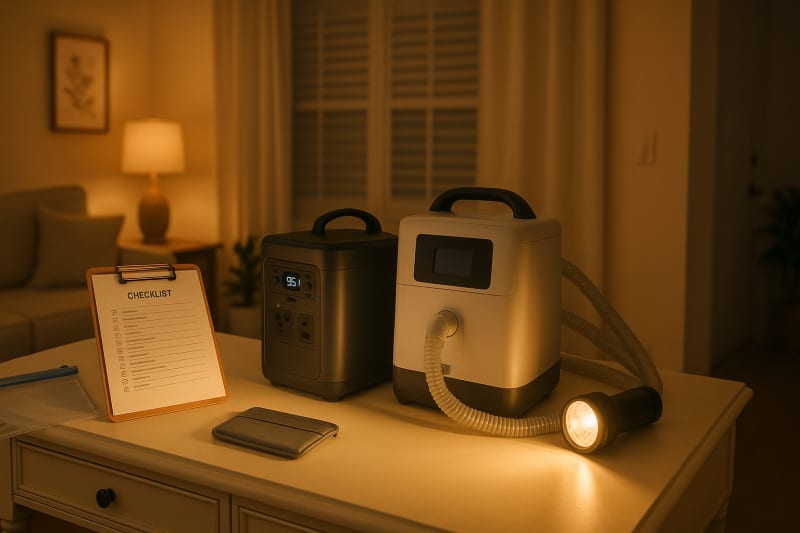
- Who will respond if the chair stops in a reclined position during a power outage?
Caregiver Considerations
If a caregiver assists with transfers, the chair needs to work for both people. Which side does the caregiver approach from? Is there enough clearance on that side for a stable stance and proper body mechanics? Where does the walker or wheelchair go during the transfer so it is out of the way but immediately accessible afterward?
The FDA Home Healthcare Medical Devices Checklist recommends that families understand device dependencies, confirm the home can accommodate the device, keep emergency contacts and backup supplies accessible, and receive hands-on training. That training should include every caregiver, not just the primary one. Keep the manufacturer's instructions in a place where anyone in the home can find them.
Power Interruption Planning
Ask about the exact model's approved battery backup or emergency lowering procedure. Some chairs have a built-in battery. Others do not. Know what the backup does, how to activate it, how long it lasts, and how to test it. If there is no backup, know the manual override procedure and make sure at least two people in the household can perform it.
The chair should support life at home without taking over the room. Color and fabric matter. But they follow safe fit and function.
What You Should Know About Medicare and Lift Chairs
This is where families get the most confused, and where honest answers matter most. The short version: do not select a chair based on an assumed reimbursement result.
What CMS Actually Covers
CMS National Coverage Determination 280.4 allows reimbursement for a medically necessary, physician-prescribed seat-lift mechanism for specified conditions when defined criteria are met. The key word is "mechanism." Payment for a chair that incorporates a lift is limited to the amount payable for the seat-lift mechanism, not the entire recliner.
The CMS Seat Lift Mechanisms Policy Article further explains that the lift mechanism and chair portion are billed separately and that documentation and written-order rules can affect payment. Other plans (Medicaid, PPO, HMO advantage plans) may apply their own processes and networks.
The Honest Answer
The honest answer is not "Medicare covers lift chairs." The honest answer is: coverage depends on the person, the prescribed need, the exact item, the documentation, the supplier, and the plan. Confirm current requirements directly with the treating clinician, the supplier, and the health plan before delivery. A suitable chair may not meet plan requirements. And clinical eligibility alone does not remove component, documentation, supplier, or timing rules.
Treat coverage and fit as two separate conversations. Get the fit right first. Then verify whether any portion is reimbursable under your specific situation.
Your Lift Chair Selection Checklist
Use this checklist to organize your evaluation. Print it, bring it with you, and work through each item before making a decision.
- Describe the person's current sit-to-stand movement and any caregiver help involved
- Review clinical positioning instructions with the treating clinician
- Measure the person using the manufacturer's fit method for the exact model
- Match seat height, depth, width, and back support to the individual
- Verify the exact model's weight capacity on the current label
- Confirm the person can reach, understand, and use the hand control
- Watch or test a smooth, controlled lift and return to sitting
- Measure every doorway, hallway, turn, stair, or elevator on the delivery route
- Mark the chair's upright footprint and full movement area in the room
- Confirm wall, footrest, transfer, walker, and caregiver clearances
- Plan a safe outlet and cord route according to manufacturer instructions
- Learn cleaning, maintenance, emergency lowering, and backup procedures
- Keep instructions accessible and teach another person how the chair works
- Verify coverage and documentation directly, without assuming an outcome
What to Do Now
This Week
- Observe the current transfer. Spend a day watching how your family member currently sits down and stands up. Note what is difficult, what hurts, and who helps. Write it down.
- Gather measurements. Measure the person's seated dimensions (seat height from floor to back of knee, seat depth from back to knee, hip width). Then measure the room: doorways, the intended location, and the path between them.
- Check with the clinician. Ask the treating physician or therapist whether there are positioning instructions or restrictions that should guide the chair selection.
This Month
- Test models in person if possible. Visit a showroom or supplier where you can see the full rise-and-recline cycle. Bring your measurements and your checklist. If the person can come with you, that is ideal.
- Verify coverage separately. Call the health plan and ask specifically about seat-lift mechanism coverage, required documentation, approved suppliers, and any prior authorization requirements. Do not assume the answer.
- Plan the room. Use painter's tape on the floor to mark the chair's full footprint and recline area. Open doors, walk the path with the mobility device, and confirm everything clears.
This Quarter
- Schedule training for all caregivers. Once the chair is delivered, make sure everyone who helps the person (including backup caregivers and visiting family) knows how to operate the controls, perform the emergency lowering procedure, and reach support if something goes wrong.
- Re-evaluate fit after 30 days. After the person has used the chair in their actual routine for a month, check in. Is the seat still comfortable? Are transfers smooth? Has anything changed about the person's mobility or the room layout that affects how the chair works?
Frequently Asked Questions
How do I know what size lift chair to buy?
Use the manufacturer's fit method for the exact model and compare it with the person's seated height, depth, hip width, back support needs, and verified weight capacity. A general size label is not enough because dimensions vary between manufacturers and models.
How far should a lift chair be from the wall?
There is no single clearance that applies to every chair. Use the exact manufacturer's required wall distance and maximum reclined depth for the model you are considering, then add room for transfers, caregiver access, and walking paths.
Does Medicare pay for the whole lift chair?
Do not assume that it does. CMS distinguishes the seat-lift mechanism from the chair and applies medical necessity, documentation, and payment rules. Coverage is limited to the mechanism portion, not the full recliner. Confirm your specific plan's current requirements before delivery.
Can someone sleep in a lift chair?
Check with the treating clinician and the chair manufacturer. A chair's recline positions do not automatically make it suitable for sleeping, and certain clinical conditions may make extended recline inadvisable.
What happens if the power goes out while the chair is reclined?
Ask about the exact model's approved backup or emergency lowering procedure, how it is tested, and what its limitations are. Keep the instructions nearby and make sure at least one other person in the household knows the process.
The Bottom Line
The right lift chair depends on three things: the person, the room, and the routine. Get those right first, verify coverage separately, and never assume that any single model works for everyone.
Have questions about what lift chair is right for your family's situation? Contact us at #1 Medical Equipment & Supply. We are happy to walk you through the options, explain the differences, and let your family decide.