Will the Equipment Actually Fit? A Home Assessment Checklist Before Delivery Day
Will the Equipment Actually Fit? A Home Assessment Checklist Before Delivery Day
Before home medical equipment is delivered, measure the entire route from your entrance to the room where the equipment will live. Then check the movement space, utilities, turns, caregiver access, lighting, cords, rugs, steps, and bathroom layout. A product can clear the front door and still be completely wrong for the room or the daily routine. The FDA's Home Healthcare Medical Devices Checklist confirms that families should understand device dependencies, verify the home can accommodate the device, and receive hands-on training before relying on any equipment at home.
Here is what you need to know: there is more to equipment fit than a single doorway measurement. Narrow hallways, tight corners, electrical limitations, and the space your caregiver needs to actually do their job all factor in. This checklist walks you through every step so delivery day goes smoothly and your loved one can use the equipment safely from day one.
Who Will Use the Equipment, and How Does Their Daily Routine Work?
Measurements matter, but the person always comes first. Before you pull out a tape measure, write down the ordinary actions the equipment must support. Every situation is different. A mobility device for someone who transfers independently requires a completely different setup than one where a caregiver assists with every move.
Start by asking yourself these questions:
- Will the person use the equipment independently or with help?
- How do they currently transfer, stand, turn, sit, or reposition?
- Which side does the caregiver normally approach from?
- Does the person already use a wheelchair, walker, cane, lift, or other device in the same space?
- Does the equipment need to move between rooms, or will it stay in one place?
- Who will clean, charge, adjust, and replace supplies for this device?
- Have vision, hearing, strength, balance, or mobility changed recently?
The FDA recommends reviewing changes in vision, hearing, movement, illness, medication, and sensation with the healthcare team because these factors can directly affect device use. Assess current ability, not an older routine from six months ago.
Why Caregiver Reality Matters
Caregiver access is something most people never think about until the equipment is already in the room. A folding chair is not practical if the caregiver cannot safely lift it. A device that enters the bathroom but blocks the caregiver's working position did not truly fit. Think about the caregiver's physical capabilities, the side they work from, and whether they can reach the person, the controls, and the exit without climbing over anything.
This is a different conversation from checking whether a box fits through a door. It is about whether the equipment works for everyone involved, every single day.
How Do You Measure the Full Delivery Route?
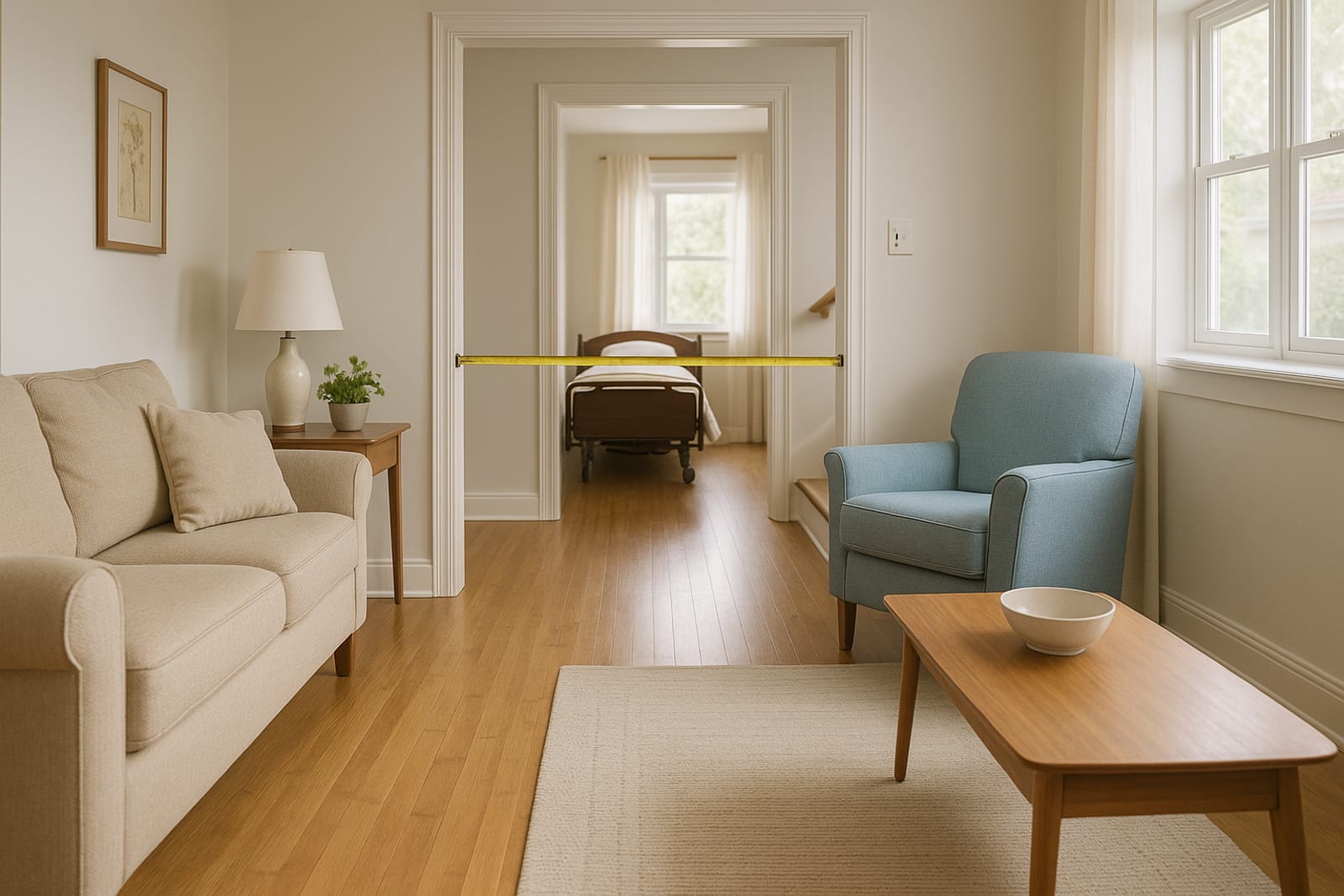
Follow the equipment's path in order, from the vehicle to its final resting spot. Use the exact model dimensions and any delivery requirements from the manufacturer. Do not rely on a doorway's nominal size, because trim, handles, and door swing can reduce clearance by inches.
The FDA notes that older homes may have smaller openings and too few suitable outlets, making a thorough walkthrough essential before selecting the final model.
Step-by-Step Measurement Guide
- Approach and entrance. Note gates, walkways, porch steps, ramps, door swings, thresholds, and the clearest entrance to the home. If the front door is too narrow, check the garage or a side entrance.
- Doorways. Measure the narrowest usable opening with the door in its actual open position. Include handles, trim, and anything that reduces clearance. A doorway that measures 32 inches on paper may only give you 29 usable inches.
- Hallways and turns. Measure corridor width and the space at every corner. A long or wide item may clear each individual opening but be unable to make the turn. L-shaped hallways and 90-degree corners are where most delivery problems happen.
- Stairs and elevators. Record step count, landing dimensions, handrail positions, elevator door opening, interior elevator dimensions, and any building access rules if you live in a condo or apartment.
- Final room. Measure the room itself, noting current furniture placement and the exact location where the equipment is expected to sit.
Share measurements and photos with your supplier before locking in the model. This is the moment to ask whether trained personnel can remove and reattach any components according to the manufacturer's instructions to get through a tight spot. Do not alter, force, tip, or disassemble a medical device unless the manufacturer and a qualified supplier confirm that the method is appropriate for that specific model.
What Space Does the Equipment Need After It Is Placed?
The footprint is only the beginning. Equipment needs functional space around it for daily use, maintenance, and emergencies. A hospital bed that fits in a bedroom corner might leave zero room for the caregiver to change sheets or assist with transfers.
Check the exact model's instructions for:
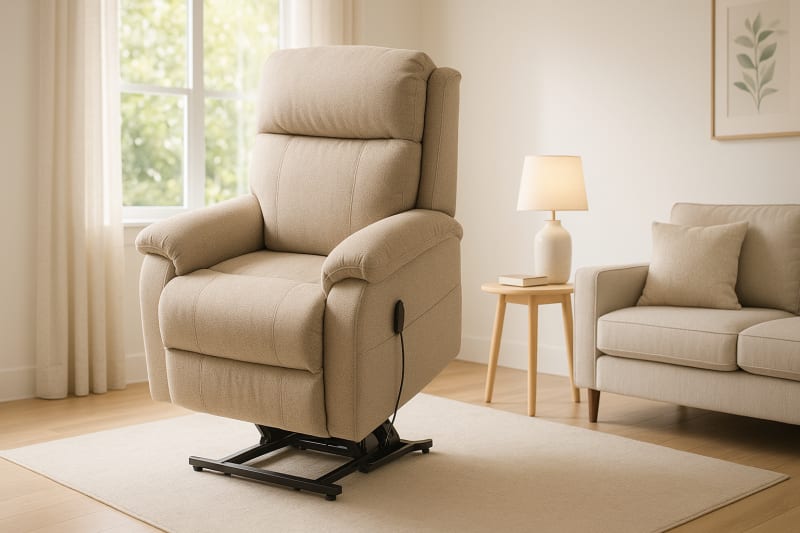
- Full movement through every powered or manual position (a lift chair needs room behind and in front for its moving back and footrest)
- Safe access to controls, batteries, filters, tubing, and emergency releases
- Ventilation and required clearance from walls, curtains, heat sources, or moisture
- A clear transfer area on the side the person and caregiver use
- Room for cleaning, maintenance, and supply replacement
- A cord route that does not cross a walking path
- Continued access to doors, closets, drawers, and the bathroom
- A clear path for a wheelchair, walker, caregiver, or emergency exit
Arranging the Room Around the Routine
A mobility device needs a route, not only a parking spot. A medical bed may need side access on both sides for repositioning. Think about what happens at 2 a.m. when someone needs to get to the bathroom, not just what the room looks like when everything is tidy at noon.
Arrange the room around the daily routine instead of squeezing equipment into an empty corner. Careful planning preserves function and the feeling of home, which matters more than most people realize when a loved one is recovering or managing a long-term condition.
Are the Power, Water, and Connection Needs Ready?
The FDA advises confirming whether the exact device needs electricity, running water, a telephone, or a computer connection before delivery day. This is not something you want to discover when the delivery team is standing in your living room.
Check the outlet location relative to where the equipment will sit and compare it to the device's cord length. The CDC recommends keeping wires next to the wall and using an electrician if another outlet is needed. Follow the device instructions for all connections and charging instead of improvising with extension cords or power strips.
Water, Internet, and Backup Considerations
For water-dependent equipment, confirm the water source, drainage, cleaning requirements, and contamination precautions. For connected equipment that relies on internet or phone service, ask what stops working offline and which backup procedure applies.
The FDA also warns that children may change controls or play with tubing, while pets may chew cords or disturb accessories. Plan the setup to account for everyone in the household, not just the person using the equipment.
What Home Hazards Should You Correct Before Delivery?
Walk the entire route the person will use daily, at the time of day they normally use it. Lighting conditions at 7 p.m. are very different from lighting conditions at noon. The CDC's STEADI Check for Safety checklist identifies common hazards including clutter on the floor, uneven steps, weak lighting, loose carpet or rugs, damaged handrails, blocking furniture, and cords stretched across walking areas.
Make sure a light is reachable from the bed and the bathroom route is visible without getting up to flip a switch. Check for slippery bathing surfaces and whether properly installed grab bars are needed near the tub or toilet.
Simple Fixes and Larger Modifications
Some solutions involve nothing more than moving furniture, taping down a rug, or adding a nightlight. Others require planned home modifications. The Administration for Community Living notes that modifications can range from simple changes to larger projects such as ramps, wider doors or hallways, improved lighting, and flooring changes. The National Institute on Aging similarly recommends clear paths, secure rugs, accessible storage, and adequate lighting to support aging in place.
Equipment and home changes should work together. A new medical bed does not help much if the path to the bathroom is still dark and cluttered with throw rugs.
What Should You Confirm With Your Supplier Before Delivery Day?
Send the supplier your measurements and ask for the exact overall dimensions of the selected model. Then have a direct conversation that covers the practical details most people forget to ask about:
- Will this exact item fit through every opening and turn along the measured route?
- What delivery configuration will arrive (assembled, partially assembled, boxed)?
- Which parts, if any, can trained personnel remove and reattach?
- What clearances are required during daily use?
- What outlet, water, or other utility requirements apply?
- Where do cords, tubing, and accessories need to go?
- What should remain accessible for service and cleaning?
- Who will demonstrate controls, alarms, and routine care?
- What should the family do if the device does not fit as expected?
Before we ever deliver anything, we want to make sure it is right for the person and the home. That is a really different conversation from checking whether a box fits through a door.
Your Complete Home Assessment Checklist Before Delivery
Use this checklist to walk through every consideration before your equipment arrives:
- Describe the person's current mobility, transfers, and caregiver support needs
- Confirm the exact equipment model and manufacturer dimensions
- Measure the approach, entrance, thresholds, doorways, hallways, turns, stairs, landings, and elevators
- Photograph tight turns and unusual access points to share with the supplier
- Measure the final room including current furniture placement
- Mark the planned equipment footprint and full movement area
- Preserve transfer space and caregiver access on the correct side
- Keep doors, closets, controls, and exit paths accessible
- Confirm electrical, water, phone, and internet requirements
- Plan cords and tubing away from walking routes
- Remove clutter and address loose rugs, poor lighting, uneven steps, and unstable handrails
- Review bathroom access and support needs (grab bars, non-slip surfaces)
- Plan safe access for cleaning, charging, supply storage, and maintenance
- Ask who will demonstrate operation and what happens if the item does not fit
What To Do Now
This Week
- Identify the exact model being ordered and request the manufacturer's dimensions from the supplier or prescribing provider.
- Walk the route from the front door to the equipment's destination and note any obvious tight spots, steps, or turns.
- Measure every doorway, hallway, and turn along the path. Write down the narrowest point at each location.
This Month
- Address hazards along the daily-use route: secure rugs, improve lighting, clear clutter, and verify that grab bars near the tub and toilet are properly installed.
- Check electrical and utility needs against what the equipment requires. If an outlet needs to be added, schedule an electrician now rather than scrambling on delivery day.
- Share measurements and photos with your equipment supplier and have the detailed conversation about fit, delivery configuration, and demonstration.
This Quarter
- Reassess the setup after two to four weeks of daily use. What looked right on paper may need adjustment once you see the actual routine play out.
- Report any changes in the person's mobility, strength, vision, or health to the healthcare team and the equipment supplier, because those changes can affect how the equipment should be used or positioned.
- Evaluate broader home modifications if the assessment revealed limitations beyond simple fixes. Use appropriately qualified professionals for work involving ramps, widened doorways, or structural changes.
Frequently Asked Questions
Is doorway width the only measurement I need?
No. Measure the narrowest opening, every turn along the route, hallways, thresholds, stairs or elevators, the final room, and the space required to use and maintain the equipment daily. A device that clears the front door can still fail at a hallway corner or leave no room for a caregiver once it is placed.
Should we move furniture before the equipment arrives?
Yes, when it safely creates the planned route and daily-use area. Keep frequently used items accessible and do not block exits, emergency controls, or caregiver access. Rearranging the room around the routine is more effective than trying to fit the equipment into whatever space is left over.
Can we use an extension cord if the outlet is too far away?
Check the device manufacturer's instructions first. Many medical devices have specific electrical requirements that extension cords cannot safely meet. If another outlet is needed, CDC guidance recommends using an electrician. Do not improvise electrical connections for medical equipment.
What if the person's mobility has changed since the order was written?
Tell the treating team and your supplier before delivery. Changes in movement, strength, vision, hearing, medication, or overall health can change how equipment should be used, positioned, or even which model is appropriate.
Who should review a complicated layout?
Share exact measurements, photos, and the daily-use plan with the equipment supplier and healthcare team. For home modifications involving structural work, use appropriately qualified professionals. A household checklist supports your planning but does not replace a clinical assessment when one is needed.
The Bottom Line
Getting medical equipment home is not just a delivery problem; it is a planning problem. The right equipment in the wrong setup creates safety risks, caregiver strain, and daily frustration that nobody needs. Measure the full route, check every utility requirement, fix hazards before the equipment arrives, and have an honest conversation with your supplier about fit.
Every home and every routine is different. If you are not sure which measurements or questions matter for a particular item, we are happy to talk through the equipment considerations with you. Give us a call or visit our showroom in Deerfield Beach and let us help you figure out what is right for your situation.
Sources: