Virtual Reality Physical Therapy at Home: It Looks Like a Game, But It Works
Virtual Reality Physical Therapy at Home: It Looks Like a Game, But It Works
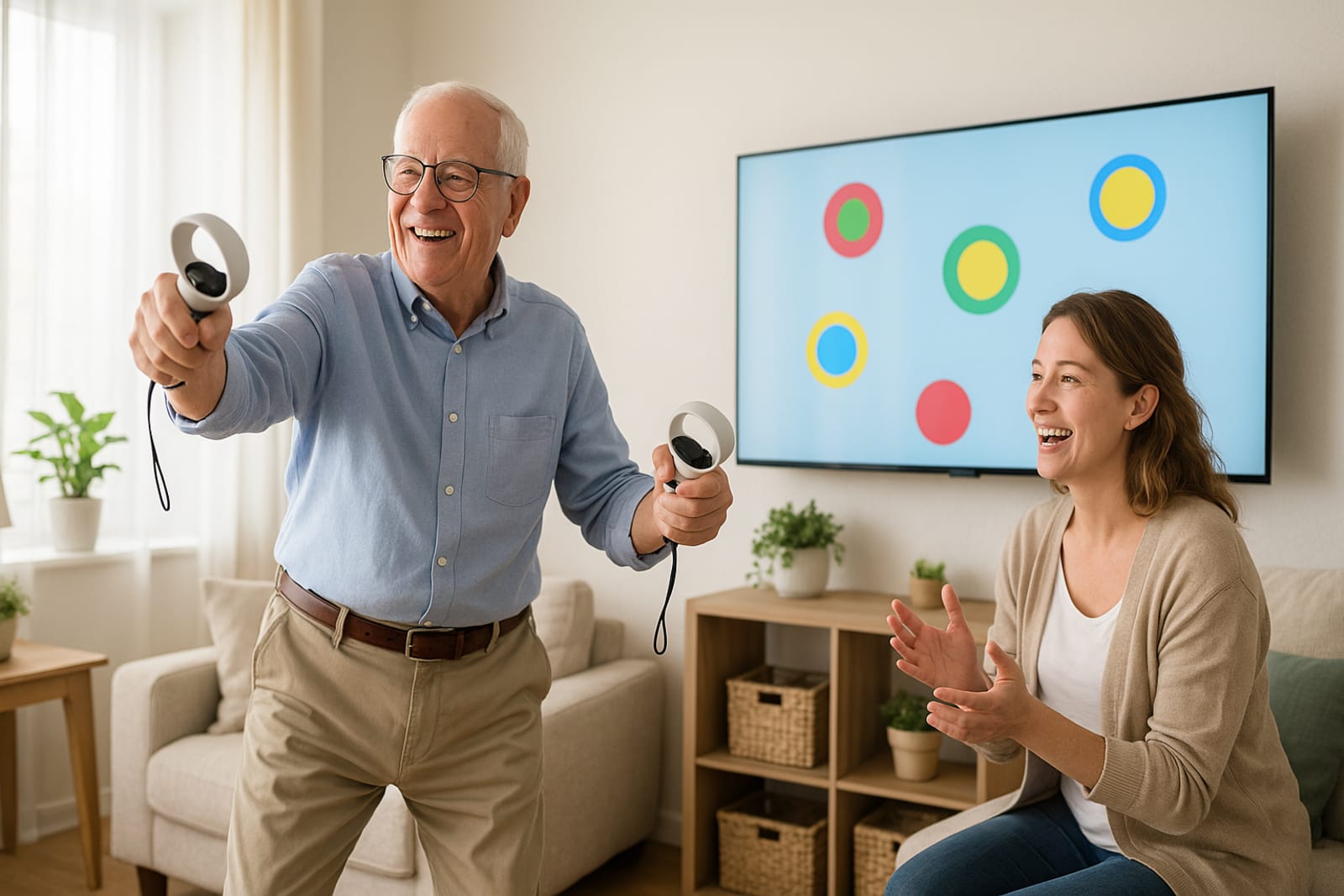
Picture your mom in her living room, holding two lightweight controllers, laughing as she swings at bubbles floating across the screen in front of her. It looks playful. A little silly, even. That is exactly the point. While she is playing, she is reaching side to side, bending at the knees, rotating her wrists, and steadying her balance. She is doing physical therapy. She just does not feel like she is doing physical therapy.
We have spent years helping South Florida families find the right equipment for recovery and aging in place: the right bed, the right wheelchair, the right shower chair for the actual bathroom it has to fit in. Virtual reality therapy is one of the newest things we have brought into that conversation, and we will be honest, it surprised us too. But the more we learned about it, the more it fit everything we already believe: everybody is different, everybody is individual, and the right tool is the one that actually works for your loved one.
The Silly Part Is the Whole Idea
Here is what most families do not realize about home exercise programs: the equipment is rarely the problem. Consistency is the problem. Traditional exercises work, but only if people actually do them. The moment therapy starts to feel like a chore, most of us find a reason to skip it. Ask anyone who has ever had a sheet of printed exercises stuck to their refrigerator.
A game flips that. When the goal is to pop the next balloon or knock down the pins, the mind is on the fun and the body quietly does the work. Plenty of families have already seen a version of this: a parent who would never "do their exercises" will happily play a round of virtual bowling because it does not feel like medicine.
What Is Actually Happening Behind the Game
Behind the fun, every movement maps to a real therapeutic goal. Depending on the program, a session works on range of motion in the shoulders and arms, bending and extension at the knees and hips, wrist and hand rotation, hand-eye coordination, and standing or seated balance.
Short sessions a couple of times a week are typically enough to start seeing progress, and because it feels like play, people come back to it. That consistency is where the real results come from. It is the same reason we tell families that the best piece of equipment is the one your loved one will actually use, not the one that looks most impressive in a catalog.
"But Could This Increase Fall Risk?"
It is a fair question, and it is usually the first one families ask us. Someone is wearing a headset. Are they going to lose their balance?
The programs are designed to support stability, not test it. Sessions can be done seated or with support nearby. The movements strengthen the same balance, coordination, and foot control that help prevent falls in the first place. And nobody is left to figure it out alone: there is guidance on when, where, and how to use it safely, the same way we walk families through the safe setup of any equipment we deliver.
For families who want a real person in the room, this is where being part of a larger family of companies matters. Our sister company #1 Home Care Services provides private in-home caregivers who can be there during sessions, and Freedom Home Healthcare, our Medicare-certified home health agency, can put a licensed physical therapist in the home for those who qualify. Either way, a real person can work right alongside the device, supervising, spotting, and making sure your loved one is moving safely. The headset does not replace that kind of human support. When a family needs it, the two work hand in hand.
There is another advantage that is easy to miss. While your loved one plays, the device is quietly keeping track: how much they are actually moving, how consistent they are from one session to the next, where progress is happening and where it stalls. That information does not just sit in an app. In the right hands, a physical therapist's, for example, it becomes the basis for a program built around your loved one instead of a generic sheet of exercises. Everybody is different. Everybody is individual. The data helps make sure the plan actually fits the person.
This is exactly the kind of question we want you to ask. Who is supervising the first session? Where in the house will this be used? Is there a clear space, a sturdy chair, good lighting? Those details are the difference between equipment that helps and equipment that sits in a closet. Nobody selling you a gadget online is going to ask them, and nobody selling you a gadget online has a home care team and a home health agency down the hall.
Who This Is For, and How It Works
The therapy runs on a lightweight virtual reality headset that is delivered right to the home, with the therapy programs managed remotely by a company called XR Health that specializes in this. It is designed for older adults living with conditions like arthritis, fibromyalgia, chronic joint pain, and similar diagnoses where movement, balance, and consistency matter to quality of life.
For qualifying patients, virtual reality therapy may be covered under Traditional Medicare. Like everything in the insurance world, coverage depends on the diagnosis, the doctor's documentation, and the specific plan, and we would rather explain that to you honestly than make you a promise on a website. The process itself is simple: a short order form, a conversation with your doctor, and the device ships to your door. From there, you are set up and supported the whole way.
If you have read anything else we have written, you know how we feel about the "you get what you get" approach in this industry. This is no different. Before we would ever recommend VR therapy, we want to know what is going on with your loved one. What is the diagnosis? What does their mobility look like today? Who else is in the home? What have they already tried, and why did it stop working? Everybody is different. Everybody is individual. Sometimes the answer is a headset. Sometimes it is a lighter wheelchair, a better bed, or the right shower chair. Usually it is a combination, and the combination should be built around the person.
Therapy People Actually Finish
The hardest part of any recovery or mobility plan is sticking with it. When the work feels like play, it gets done. That is the quiet advantage here: not that the technology looks futuristic, but that people genuinely enjoy it enough to keep going. And in our world, the tool your loved one will actually use beats the fancier one gathering dust, every single time.
Your home is not a hospital, and staying strong at home should not feel like a hospital either. If it can feel like a game your mom laughs through, even better.
Have questions about whether virtual reality therapy is a fit for your family, or what Medicare may cover for your situation? Give us a call at #1 Medical Equipment & Supply. We will walk you through it, ask the questions nobody else asks, and help you figure out what is right for your loved one, even if the answer is not something we sell.