A Caregiver's Checklist: How to Prepare Your Home Before Your Loved One Leaves the Hospital
A Caregiver's Checklist: How to Prepare Your Home Before Your Loved One Leaves the Hospital
You just got the call. Mom had a fall, or Dad is recovering from surgery, and the hospital says they're being discharged in two days. Maybe tomorrow. You're relieved they're coming home, but almost immediately, a wave of questions hits you. Is the house ready? Do we need a hospital bed? What about the bathroom? Can she even get up the front steps?
Take a breath. You're not the first person to feel completely unprepared for this moment, and you won't be the last. Hospital discharges happen fast, sometimes faster than families are ready for, and the gap between "your loved one is coming home" and "your home is actually ready for them" can feel enormous.
The good news is that with the right checklist, the right questions, and the right partner walking you through it, you can close that gap quickly and confidently. This guide is designed to walk you through everything you need to think about, from the equipment you may need to the conversations you should be having with the discharge planner, to the mindset shift that makes the entire transition smoother for everyone involved.
Here's what you need to know to bring your loved one home safely, comfortably, and with confidence.
The Moment Everything Changes: Understanding Hospital Discharge
Hospital discharge is one of the most critical transitions in a patient's care journey. Studies consistently show that patients who receive quality care at home tend to recover better, feel more comfortable, and experience improved outcomes. But "quality care at home" doesn't happen by accident. It requires preparation, and that preparation often falls on the shoulders of a family caregiver who has never done this before.
When someone is discharged, a referral for durable medical equipment (DME) is typically generated. That referral might go to any number of companies. Some will simply check what your insurance covers, ship the standard items, and move on. That approach treats your loved one like a claim number, not a person.
A better approach starts with a conversation. At #1 Medical Equipment & Supply, the process begins the moment a referral comes in. The first step is always a phone call to the family or the patient. As we see it, "We get to understand who they are and what their needs are." Because everybody is different. Everybody is individual. And the equipment that works for one patient in one home may be completely wrong for another.
That difference in approach, the consultative conversation versus the "you get what you get" method, is what separates a smooth homecoming from a stressful one.
Your Mindset Matters: Shifting from Crisis to Confidence
Before we talk about grab bars and wheelchairs, let's talk about you for a moment. If you're the adult child or spouse who just got the discharge call, your brain is probably running in ten directions at once. You might feel pressure to say yes to everything the hospital suggests, or you might feel like you need to figure it all out on your own overnight.
Neither of those instincts serves you well.
Give Yourself Permission to Ask Questions
The discharge process can feel rushed. Hospitals have timelines, beds to free up, and paperwork to complete. But you have every right to slow down and ask questions before your loved one comes home. The discharge planner is your first resource. They can tell you what level of care is recommended, what equipment has been prescribed, and whether home health services like nursing or physical therapy will be involved.
Here are the questions you should ask the discharge planner before your loved one leaves the hospital:
- What specific equipment has been ordered? Get the exact list, whether it's a wheelchair, walker, hospital bed, commode, or shower chair.
- What does my loved one's insurance actually cover? And just as importantly, what does the clinical documentation support? If the documentation doesn't meet the requirements for a specific item, your family could end up financially responsible.
- Will home health services be arranged? Physical therapy, occupational therapy, and home nursing visits can be critical in the first weeks.
- What are the warning signs that would require a return to the hospital? Make sure you know what to watch for.
- Who is the DME provider, and can I speak with them before delivery? This is crucial. You want to talk to the equipment provider before anything shows up at your door.
You Don't Have to Do This Alone
One of the biggest mistakes caregivers make is trying to handle everything themselves. Whether it's researching equipment on Amazon at midnight or attempting to assemble a shower chair from a box, the DIY approach introduces risk. Who is setting that up? Who is making sure it's done properly and safely? These are questions that matter, because when we're talking about someone's health, even the smallest detail can prevent a fall or a serious injury.
The right medical equipment provider doesn't just drop off boxes. They walk you through every decision, explain your options, and make sure the equipment actually fits your loved one's needs and your home's layout.
The Equipment Checklist: Room by Room
Now let's get practical. Depending on your loved one's condition, mobility level, and the layout of your home, you may need equipment in several areas. Here's a room-by-room breakdown of what to consider.
The Bedroom: Where Recovery Happens
Your loved one will likely spend a significant amount of time in bed during recovery. The bed itself is one of the most important decisions you'll make.
Under Medicare guidelines, what most patients are entitled to is called a semi-electric home hospital bed. In reality, that's a twin-size adjustable bed with a crank for height adjustment, often delivered as a used product with a used mattress. It's a bent metal frame with a spring mattress. And for someone who has spent their entire life sleeping in a comfortable queen or king bed next to their spouse, it can be a jarring, demoralizing change.
There's another option. Residential medical beds, sometimes called premium medical beds, are designed to look and feel like the bed your loved one has always known. They come in full, queen, and split king sizes. They offer memory foam, innerspring, or combination mattresses. They provide electric high-low functionality up to two feet, Trendelenburg tilt for spinal relief and blood pressure regulation, and true zero gravity positioning.
The philosophy behind residential medical beds is simple: your home is not a hospital. Someone coming home to recover doesn't want to feel like their house has been turned into an institution. A better bed means better sleep, and better sleep means better recovery. That's true for the patient and for the spouse or caregiver sleeping nearby.
Key bedroom checklist items:
- Hospital bed or residential medical bed (based on needs, budget, and insurance coverage)
- Appropriate mattress (pressure relief matters, especially for preventing skin breakdown)
- Bed rail or assist bar for safe repositioning and getting in and out of bed
- Overbed table for meals, medication, and personal items
- Adequate lighting including a nightlight for safe nighttime movement
The Bathroom: The Highest-Risk Room in the House
The bathroom is where most in-home falls happen, and falls are the leading cause of injury for older adults. This is the room that demands the most attention.
Something as simple as a shower chair involves more decision-making than most people realize. What's the design of your bathroom? How is your shower set up? If you put a standard shower chair in, is it going to be difficult for your loved one to walk around it and sit down? Would a rotating shower chair where they can sit and then swivel into position be safer? Would a rolling shower chair make more sense?
The same level of detail applies to commodes. There are different types of seat positioning, flip-back armrests, elevation options, and even commodes that act as a lift to help someone stand up. The right choice depends on your loved one's specific condition, strength, and balance.
Bathroom safety checklist:
- Shower chair or bath bench (matched to your specific shower/tub layout)
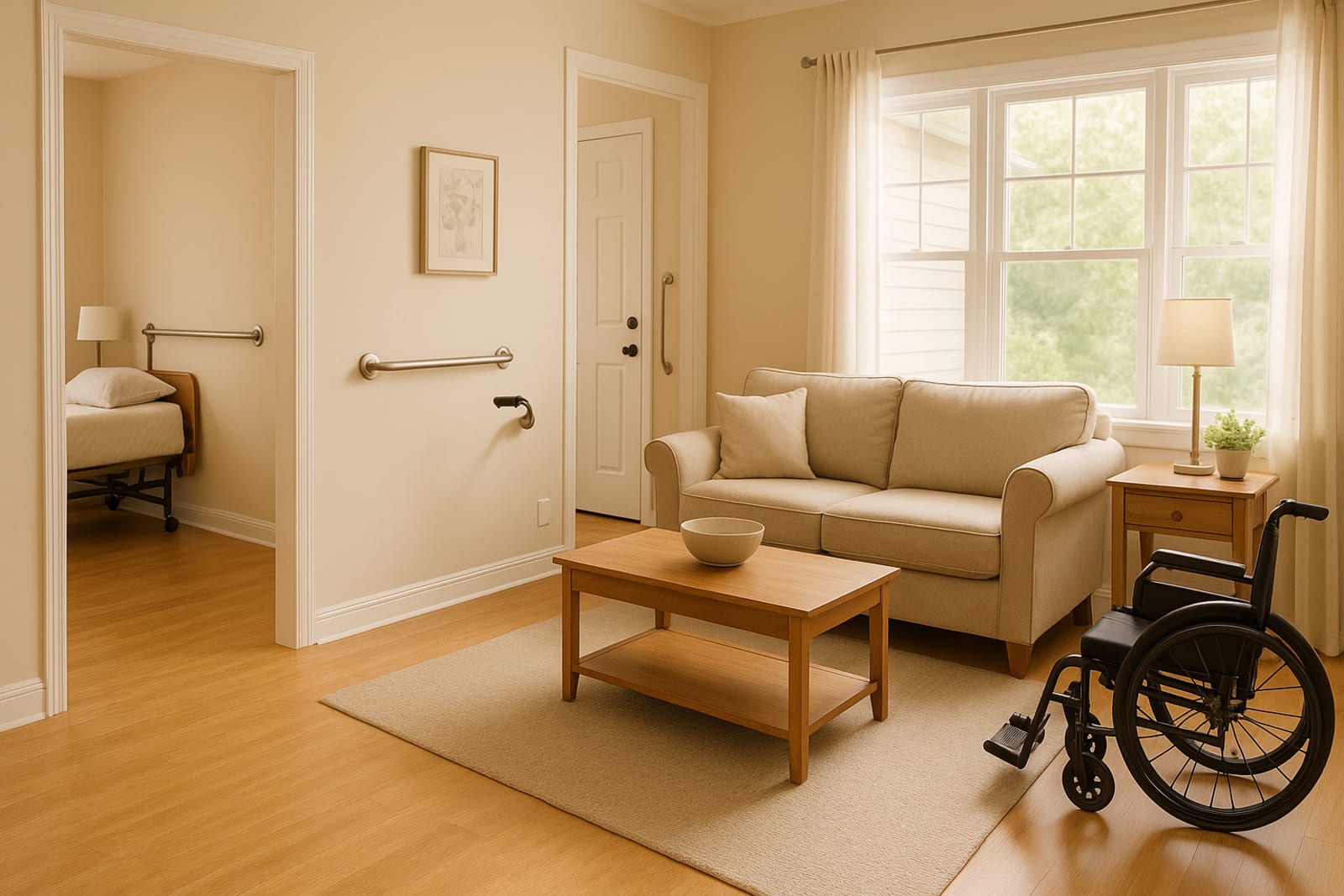
- Grab bars installed near the toilet, shower, and tub
- Raised toilet seat or bedside commode (based on mobility and transfer ability)
- Non-slip bath mat inside and outside the shower or tub
- Handheld showerhead for easier, safer bathing
Mobility: Getting Around the House and Beyond
Whether your loved one needs a walker, wheelchair, or scooter, mobility equipment has to match both the patient and the caregiver's reality.
Here's a scenario that plays out every day: a doctor writes an order for a manual wheelchair. The standard Medicare-covered manual wheelchair is steel and weighs 35 to 37 pounds. Now ask yourself: who is going to put that in the car? If the answer is an 80-year-old spouse, that's a problem. They could hurt themselves, scratch up the car, or both.
There are lightweight manual wheelchair options that weigh as little as 15 pounds and provide the same support and mobility. There are compact power chairs that weigh as little as 24 pounds. The technology in this space is advancing rapidly, with new innovations emerging every year at industry events like Medtrade. The options are better than ever, but you have to know they exist, and someone has to ask the right questions to match you with the right one.
Mobility checklist:
- Walker or rollator (based on stability needs and indoor vs. outdoor use)
- Wheelchair (consider weight, transport needs, and who will be lifting it)
- Ramp or threshold modifications if there are steps at entry points
- Scooter (for longer distances or outdoor mobility needs)
- Clear pathways throughout the home, removing rugs, cords, and clutter that create trip hazards
The Living Room and Common Areas
Your loved one shouldn't be confined to the bedroom. Making common living spaces accessible and comfortable is part of the recovery.
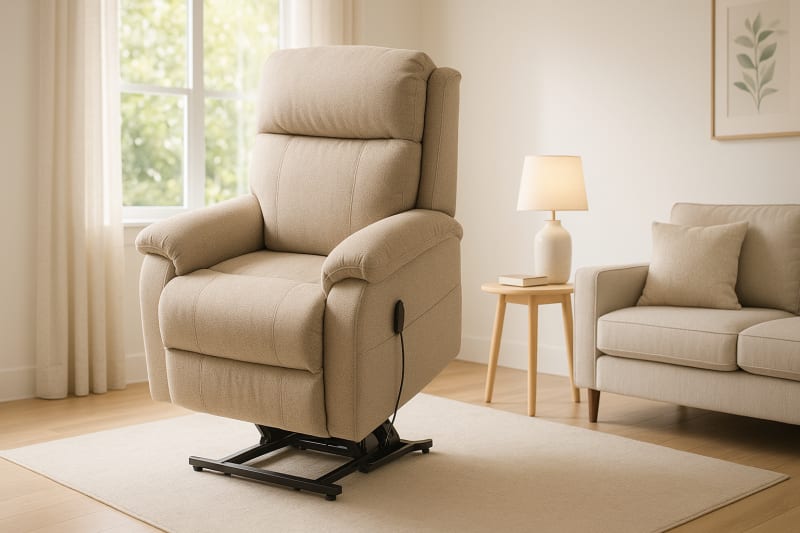
- Lift chair or recliner with lift function (some models now include built-in Swedish massage for therapeutic comfort)
- Stable side tables at the right height for medications, drinks, and phone access
- Clear walking paths with no obstacles between the bedroom, bathroom, and living area
- Proper lighting in hallways and transitions between rooms
The Insurance Conversation: What You Need to Know
Insurance coverage for durable medical equipment confuses almost everyone, and the confusion can be costly.
The biggest misconception people have is that if a doctor orders it, insurance will automatically pay for it. That's not how it works. If your loved one's clinical documentation doesn't meet the specific requirements for the item, the claim can be denied or audited, and your family may be financially responsible.
There are also significant differences between traditional Medicare and Medicare Advantage plans, and between PPO and HMO Advantage plans. Reimbursement rates vary widely. Most DME coverage isn't a one-time payment; it's typically a 13-month capitation cycle, which means there are ongoing obligations and timelines to be aware of.
Questions to Ask About Coverage
- What specific items are covered under my loved one's current plan?
- Does the clinical documentation support the equipment being ordered?
- Is this traditional Medicare, a PPO Advantage plan, or an HMO Advantage plan?
- What is the capitation period, and what are our responsibilities during that time?
- Are there upgrade options available if we want to pay the difference for better equipment out of pocket?
A knowledgeable DME provider will walk you through all of this before anything gets delivered. They'll make sure your loved one is properly qualified for the equipment and that you understand the financial picture clearly.
Why a Consultative Partner Matters More Than a Quick Delivery
In 2026, you can order almost anything online and have it at your door in 48 hours. But medical equipment isn't a commodity purchase. It's a healthcare decision that directly impacts safety, recovery, and quality of life.
When you order a shower chair on Amazon, no one asks you about your bathroom layout. No one asks if your loved one can step over the tub ledge. No one asks who is assembling it and whether they know how to make sure it's stable and safe. No one explains why one commode costs $20 more than another and what that difference means for your parent's safety.
A consultative medical equipment provider does all of that. They explain the difference between products, walk you through the options, and then give you a recommendation based on experience, letting you make the final decision. They catch the things that a product listing never will, like the fact that a standard wheelchair is going to be too heavy for your mother's spouse to lift, or that a basic shower chair won't work with the layout of your specific bathroom.
That level of care is what turns a stressful discharge into a confident homecoming.
What to Do Now: Your Action Plan by Timeframe
This Week (Before or Immediately After Discharge)
- Talk to the discharge planner. Get the full list of recommended equipment and services. Ask every question on the list above.
- Call your DME provider. Don't wait for equipment to just show up. Have a conversation about your loved one's specific needs, your home layout, and your concerns.
- Secure the bathroom. Grab bars, non-slip mats, and a proper shower chair or commode should be in place before your loved one comes home.
- Clear the pathways. Walk through your home and remove every trip hazard: loose rugs, power cords, clutter in hallways.
This Month (The First 30 Days at Home)
- Evaluate the equipment in action. Is the wheelchair manageable? Is the bed comfortable? Is the shower chair working safely? If something isn't right, speak up.
- Assess whether upgrades are needed. Now that you've seen the day-to-day reality, you may realize that a residential medical bed, a lighter wheelchair, or a different commode would make a meaningful difference.
- Coordinate with home health providers. Make sure physical therapy, nursing visits, and any other services are happening on schedule.
This Quarter (Ongoing Optimization)
- Review the insurance capitation timeline. Understand when coverage periods end and what your financial obligations are.
- Look into aging-in-place modifications. If your loved one will be recovering at home long-term or transitioning to permanent home-based care, consider broader modifications like ramps, stairlifts, or upgraded bedroom furniture.
- Reassess mobility needs. As recovery progresses, mobility needs change. A wheelchair user may transition to a walker. A walker user may need a scooter for longer outings. Stay in touch with your equipment provider.
The Bottom Line
Bringing a loved one home from the hospital is one of the most important transitions your family will navigate. The right preparation, the right equipment, and the right partner make the difference between a stressful experience and a safe, comfortable homecoming. You don't have to figure this out alone, and you shouldn't settle for the "you get what you get" approach when it comes to someone you love.
Ready to prepare your home for your loved one's return? Contact #1 Medical Equipment & Supply today. We'll walk you through every step, answer every question, and make sure the equipment that arrives at your door is right for your family, not just what's standard. Call us or visit 1medsupply.com to start the conversation.