Why 'You Get What You Get' Is Failing Patients, And How to Demand Better Medical Equipment at Home
Why 'You Get What You Get' Is Failing Patients, And How to Demand Better Medical Equipment at Home
Your parent just got discharged from the hospital. The social worker handed you a stack of papers, rattled off a few phone numbers, and told you someone would deliver "the equipment" within 48 hours. You didn't choose the company. You didn't choose the products. And when a heavy steel wheelchair or a used twin-size hospital bed showed up at the front door, nobody asked whether it was actually right for your family.
If this sounds familiar, you're not alone. This is the standard experience for millions of families navigating the durable medical equipment (DME) industry in 2026, and it's a problem that's long overdue for a reckoning.
The truth is, the traditional DME model treats patients like line items on a billing sheet. Equipment gets shipped based on insurance codes, not individual needs. And families, overwhelmed by the stress of caregiving, often accept whatever arrives because they don't know they have other options.
Here's what you need to know: the standard approach is broken, better alternatives exist, and you have every right to advocate for equipment that actually fits your loved one's life. Let's break down why this matters and exactly how to take control.
The Broken Standard: How Most DME Companies Operate
To understand why so many families end up with the wrong equipment, you need to understand how the referral process typically works. When a patient is discharged from a hospital or rehabilitation facility, a referral for medical equipment is generated. That referral goes to a DME provider, sometimes one the patient chose, but more often one the facility selected for them.
What happens next is where things go sideways.
"What a lot of other companies do is they kind of just use the 'you get what you get and don't get upset' method." The insurance plan dictates a list of covered items, the provider ships whatever qualifies under those codes, and the delivery truck is on its way before anyone has asked a single question about the patient's actual living situation, physical capabilities, or daily routine.
That manual wheelchair the doctor ordered? It's steel. It weighs 35 to 37 pounds. But nobody asked who's going to lift it into the car. If your loved one's 80-year-old spouse is the primary caregiver, that wheelchair isn't just inconvenient, it's a safety hazard waiting to happen. She's going to hurt herself trying to wrestle it into the trunk, or she'll scratch up the car, or both. Meanwhile, a 15-pound lightweight option exists that provides the same support with a fraction of the hassle.
Why the "Code-and-Ship" Model Persists
The economics of traditional DME don't reward personalization. Insurance reimbursement rates are low, often shockingly so, and they operate on a 13-month capitation cycle, meaning the provider isn't paid in one lump sum but over more than a year. For many companies, the math only works if they minimize the time spent per patient. Ship the cheapest qualifying item as fast as possible, move on to the next referral, repeat.
This isn't malice. It's a system that incentivizes speed over quality. But when you're the family on the receiving end, the distinction between a systemic problem and a personal failure doesn't matter much. You're still stuck with equipment that doesn't work.
The Real Cost of One-Size-Fits-All
The consequences of the wrong equipment aren't just about comfort, though comfort matters enormously when someone is recovering from surgery, managing a chronic condition, or navigating end-of-life care. The wrong equipment creates real safety risks.
Consider something as seemingly simple as a shower chair. If nobody asks about the layout of your bathroom, how the shower is configured, how much space there is to maneuver, whether your loved one can walk around the chair to sit down, you might end up with a product that actually increases fall risk. Does the patient need a rotating shower chair so they can sit first and then swivel into position? A rolling shower chair? The details matter because something as simple as the wrong shower chair can mean the difference between your loved one staying safe and a fall that leads to a terminal outcome.
The same principle applies across every product category: commodes with the wrong seat height or armrest configuration, walkers that don't match the patient's grip strength, beds that isolate a spouse who's been sleeping beside their partner for 50 years.
What a Consultative Approach Actually Looks Like
There's a fundamentally different way to handle medical equipment, one that starts with a conversation, not a shipping label. "We do things a lot differently than others."
A truly consultative DME provider begins every interaction the same way: by calling the family or the patient and getting to understand who they are and what their needs are. Before a single piece of equipment leaves the warehouse, the provider should be asking questions that go far beyond what insurance codes require.
The Questions Nobody Else Asks
The hallmark of a consultative approach is asking the questions that big-box retailers, Amazon, and code-and-ship DME companies never will:
- Who is the caregiver? Is it a professional aide, a younger family member, or an elderly spouse? This single question changes equipment recommendations across the board.
- Who is setting up the equipment? If a patient orders a commode or shower chair from Amazon, who's breaking down that box, assembling it, and making sure it's installed properly and safely?
- What does the home look like? The layout of a bathroom, the width of doorways, the distance from the bedroom to the kitchen, these details determine whether equipment helps or hinders daily life.
- What's the patient's history? Severe arthritis, post-surgical pain, skin breakdown risk, balance issues, each condition demands different product features.
- What matters to this family emotionally? A patient who has shared a king-size bed with their spouse for decades faces a real psychological toll when they're suddenly confined to a 36-by-80-inch twin hospital bed with a used spring mattress.
Every one of these questions leads to a different, better product recommendation. And every one of them is routinely skipped in the standard DME model.
Real Example: The Weekend Commode Call
Here's a scenario that plays out constantly. A client was coming home from the hospital over the weekend and was about to hop on Amazon to buy a shower chair and a commode. Seems straightforward, right? But consider:
A commode isn't just a commode. There are different types of seat positioning, flip-back armrests versus fixed, varying elevations, and models that double as a stand-assist lift. The patient might think they just need something "a little bit higher." But if the commode is steel and the patient has trouble standing, a higher seat on an unstable frame actually creates a new problem. A commode with built-in lift assistance might be the right call, but you'd never know that from a product listing on Amazon.
Amazon isn't going to ask about your bathroom layout. It's not going to explain the difference in product quality or tell you why one model costs $20 more than another. It's not going to warn you that the wrong product could contribute to skin breakdown or a dangerous fall. It's just going to be there, and it's up to you to figure it out on your own.
A consultative provider, by contrast, walks you through the differences, explains your options, and makes a recommendation based on years of experience, then lets you decide what's best for your family.
The Home Is Not a Hospital: Why Equipment Matters for Quality of Life
One of the most overlooked aspects of home medical equipment is its impact on emotional well-being, not just for the patient, but for the entire family. Your home is your home. It's not a hospital. And somebody coming home to recover doesn't want to feel like their house has been turned into an institution.
This is where the difference between insurance-grade equipment and premium medical furniture becomes dramatic.
The Hospital Bed Problem
Under Medicare guidelines, what a patient is entitled to is a semi-electric home hospital bed, essentially an adjustable bed with a manual crank for height adjustment of about eight inches. Here's the reality of what arrives:
- It's twin-sized only. A patient who has slept in a queen or king bed their entire life is suddenly isolated in a 36-by-80-inch frame.
- It's often used. Nine times out of ten, it's not a new bed. It's a used product with a used mattress.
- It's institutional. A bent metal frame with a spring mattress doesn't look, feel, or function like anything that belongs in someone's home.
- The crank requires help. Someone has to do the cranking, and if the patient lives alone or with an elderly spouse, that's another unresolved problem.
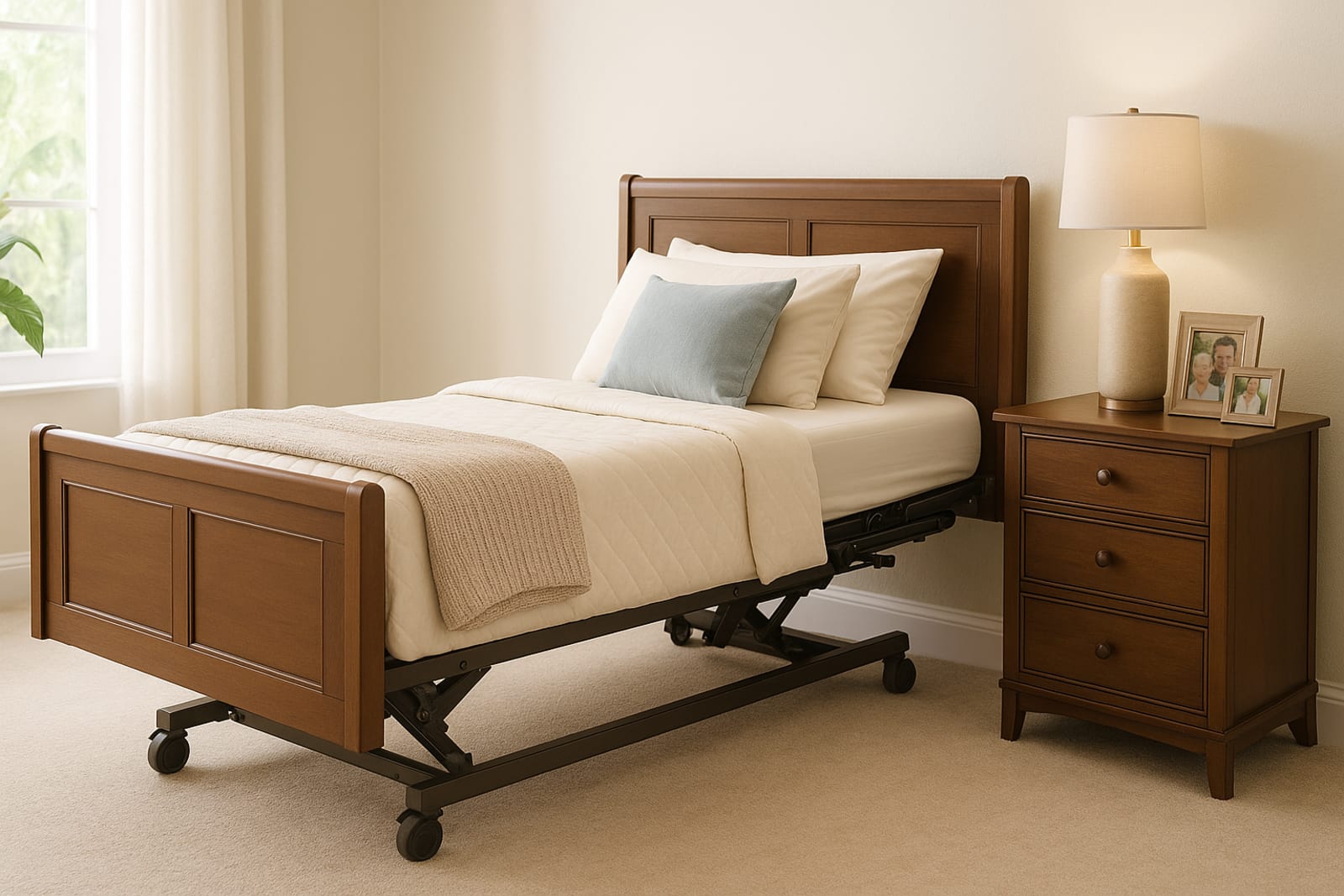
Contrast that with a residential medical bed, a premium product that provides the same (or superior) medical functionality while looking and feeling like a real piece of bedroom furniture. We're talking true sizing in full, queen, and split king options so couples can stay together while each person gets individual functionality. We're talking memory foam, innerspring, and combination mattress options. We're talking about low-profile designs that go all the way to the ground for safety, electric high-low adjustment up to two feet, and advanced features like Trendelenburg tilt for spinal relief and blood pressure regulation.
And then there's true zero gravity positioning, not the marketing gimmick you see from adjustable bed companies, but actual zero gravity that requires a Trendelenburg position where the heels are elevated above the head before adjusting the upper body back up. For patients with severe arthritis or post-surgical pain, the difference is night and day.
Better Sleep, Better Recovery, Better Care
Studies consistently show that patients who receive care at home have better outcomes, and they want to feel like they're home while they recover. If a spouse can sleep next to their partner, if the patient gets genuinely restful sleep instead of tossing on an uncomfortable institutional mattress, recovery timelines improve. Quality of life improves. The entire care experience improves.
Think about it this way: the same way you invested in the best mattress you could afford throughout your adult life, that investment matters twice as much past age 75 and ten times more when dealing with a clinical illness or injury. Cutting corners on the very thing that supports your body 8 to 12 hours a day during recovery is penny-wise and pound-foolish.
What Insurance Actually Covers (And What It Doesn't)
Insurance coverage for durable medical equipment confuses virtually everyone, and the misconceptions can be costly. Here's what most families don't realize until it's too late.
Clinical Documentation Is Everything
Before you even get to the question of what your insurance covers, there's a critical prerequisite: your clinical documentation must meet the specific requirements for every item. If the notes from your physician don't include the right clinical justification, you may be financially responsible for the equipment, or it will be picked up and taken back. Many DME companies never explain this. They process the order, ship the equipment, and leave you holding the bag if an audit reveals a documentation gap.
Medicare vs. Advantage Plans
The type of insurance you carry dramatically affects your equipment options:
- Traditional Medicare operates under one set of rules with standardized reimbursement rates.
- Medicare Advantage plans vary wildly depending on whether they're PPO or HMO. The reimbursement rates for providers on advantage plans are often significantly lower, which affects both the equipment available and the level of service you can expect.
- The 13-month capitation cycle means that DME is typically paid out over 13 months, not in a single payment. If something happens to the equipment during that period and you don't allow the provider to pick it up according to the agreement, you may become financially responsible.
The Uncomfortable Truth About Medicare's Mission
Here's a reality that needs to be said plainly: the job of Medicare is to give people enough equipment to live their life, not to be comfortable. Medicare provides a baseline. It covers functional minimums. It does not cover premium residential beds, the latest lightweight power chairs, or advanced therapeutic features. Those products exist, and the technology is improving every year, but they are out-of-pocket expenses paid privately or through long-term care insurance.
Understanding this distinction is empowering, not discouraging. It means you can make informed decisions about when insurance-covered equipment is adequate and when investing in a premium alternative will meaningfully improve your loved one's quality of life.
The 2026 Landscape: Technology Is Outpacing Regulation
The medical equipment industry is experiencing a wave of innovation that's making life measurably better for patients, even as regulatory agencies and insurance reimbursement structures struggle to keep up.
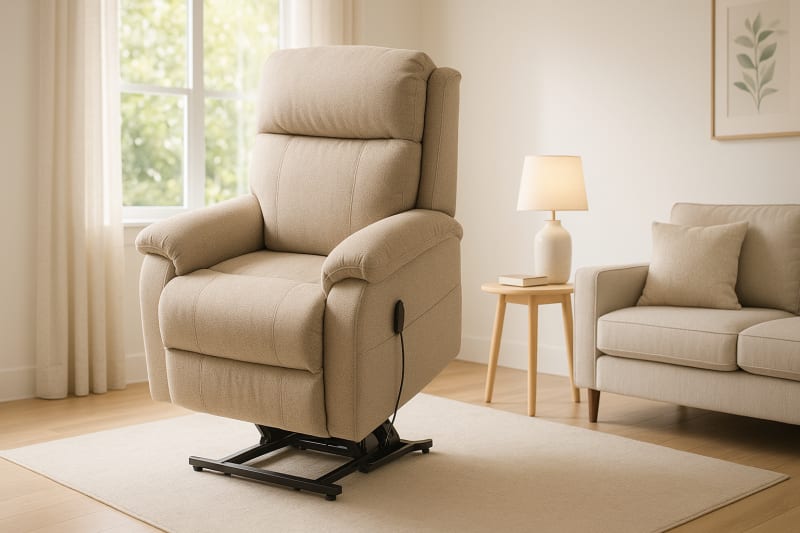
Brands like iCare are bringing residential medical beds from New Zealand that deliver the functionality of products costing three times as much, with options in colors and materials that make them feel like they belong in your home. Golden Technologies is building genuine Swedish massage systems into their Brisa line of lift chairs. Compact power wheelchairs have dropped to as little as 24 pounds, lighter than the 35-to-37-pound steel manual wheelchair that Medicare covers. There are even new attachments that convert manual wheelchairs into motorized scooters, eliminating the constant transfers that wear patients down.
The innovation is thrilling. The regulatory reality is frustrating. The FDA is an estimated 10 to 12 years behind in keeping up with new medical equipment technologies, and insurance reimbursement codes aren't evolving to cover these advances. Newer companies can't justify the expense of getting their products properly coded when the reimbursement won't support it.
For you as a consumer, this means the best products on the market are increasingly available, but you need a provider who stays current on what's out there, attends industry events like Medtrade, and can guide you through options that go beyond what shows up in an insurance catalog.
What to Do Now: Your Action Plan for Better Care at Home
Knowing the system is broken is step one. Taking action is step two. Here's a practical timeline for advocating for better medical equipment for yourself or your loved one.
This Week
- Ask questions before accepting delivery. If a DME referral has been placed, call the provider and ask: What specific products are you sending? Why these products? What alternatives exist? If they can't or won't answer, that's a red flag.
- Assess the home environment. Walk through the home with fresh eyes. Measure bathroom dimensions. Note doorway widths. Identify where equipment will be used daily and whether the planned products actually fit those spaces.
- Review clinical documentation. Request copies of the physician's notes and equipment orders. Confirm that the documentation supports every item being ordered so you're not left financially exposed.
This Month
- Get a second opinion on equipment. Just as you would with a medical diagnosis, seek a consultative assessment from a provider who takes the time to understand your family's specific situation, your caregiver's physical abilities, the home layout, the patient's emotional needs.
- Understand your insurance. Call your insurance company and ask: Am I on traditional Medicare or an advantage plan? PPO or HMO? What is covered for DME, and what are my out-of-pocket responsibilities? What does the 13-month capitation period mean for my specific situation?
- Research premium alternatives. For critical items like beds and mobility devices, explore residential medical furniture options that go beyond the insurance baseline. Compare the features, not just the price.
This Quarter
- Build a relationship with a consultative provider. Don't wait for the next hospital discharge to find a trustworthy DME partner. Establish that relationship now so you have an expert to call when the time comes.
- Evaluate long-term care insurance. If premium medical equipment is important to your family's care plan, explore whether long-term care insurance could cover products that Medicare won't.
- Advocate for change. Talk to your physicians, case managers, and discharge planners about the importance of personalized equipment selection. The more families demand better, the more the industry will be forced to respond.
The Bottom Line
The standard DME model prioritizes speed and insurance codes over patient well-being, and families deserve better. Every patient is different, every home is different, and the equipment should match, not the other way around. You have the right to ask questions, demand personalized assessments, and choose a provider who treats your loved one like an individual, not a billing code.
If you or a family member is navigating a hospital discharge, recovering at home, or simply exploring better equipment options for aging in place, we're here to have that conversation. Contact #1 Medical Equipment & Supply today at 1medsupply.com to schedule a consultation, because the right equipment isn't just about function. It's about dignity, comfort, and the quality of life your family deserves.